
The fitness and health industry is changing. Digitalization, automation and artificial intelligence are not only changing training methods, but increasingly also the organization and service in gyms, health centers and rehabilitation facilities. While digital training equipment, wearables and online coaching have been the main focus in recent years, a new technology is now taking center stage: service robots.
These intelligent systems take on tasks such as cleaning, reception, orientation or services - creating more efficiency, better hygiene and a modern experience for members and visitors. One company that is particularly active in this area is FuCo-Care GmbH with its FuCo-Care Robotics brand.
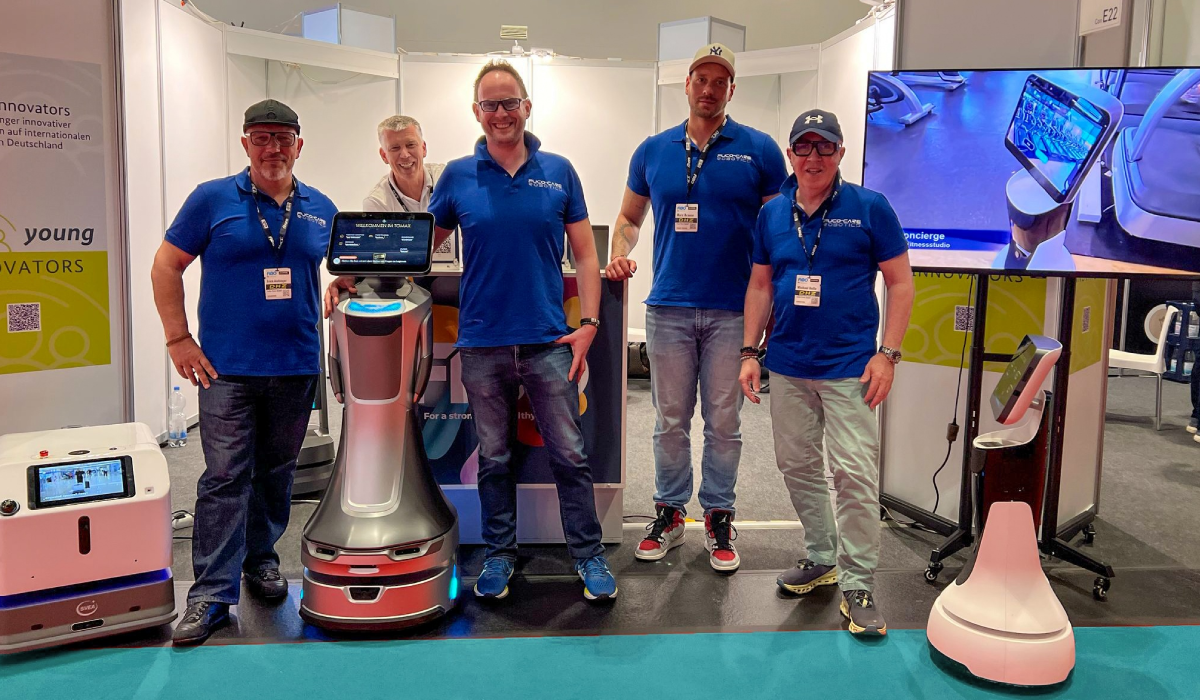
The company's robotics solutions - in particular the L3 cleaning robot and the Concierge Nova reception robot - open up new opportunities for gyms and health centers to automate processes while improving service quality. This magazine article explains in detail how this technology works, what benefits it offers and why service robots will play an increasingly important role in everyday gym life in the future.
Robotics in the gym: why automation is becoming increasingly important
Gyms are among the facilities with a particularly high frequency of use. Hundreds of members train every day in a limited space. This also increases the demands on hygiene and cleanliness, service quality, process efficiency and personnel planning.
Especially in times of a shortage of skilled workers and rising operating costs, many operators are looking for solutions to organize routine tasks more efficiently. This is precisely where robotics comes into play, as service robots can automate recurring tasks such as floor cleaning, reception and orientation, customer information, promotion and marketing as well as internal logistics.
The aim is not to replace human employees. Rather, the aim is to relieve teams and give them more time for personal support and advice.
FuCo-Care Robotics - a company for intelligent service robotics
FuCo-Care GmbH develops and sells intelligent service and cleaning robots for a wide range of industries under the name FuCo-Care Robotics. These include fitness studios and health centers, rehabilitation and therapy facilities, hotels and restaurants, office buildings, retail and public facilities.
The company's aim is to integrate modern robotic solutions into everyday working life in order to make processes more efficient and future-proof companies. The solutions are specifically designed to relieve staff, reduce operating costs, automate workflows and create a modern customer experience.
FuCo-Care Robotics sees itself not only as a technology provider, but also as a partner for digital transformation in the service sector. This technology offers great advantages for fitness studios in particular, as many processes are standardized and recurring.
Cleanliness is the key to trust: The L3 cleaning robot in the gym
Anyone entering a gym often unconsciously pays immediate attention to one detail: cleanliness. Well-kept floors, hygienic training areas and a tidy ambience convey professionalism and ensure that members feel comfortable. Especially in fitness and health studios, hygiene is more than just a convenience factor - it is part of the health culture. The challenge for operators is to keep large areas permanently clean. Training areas, cardio zones, corridors, entrance areas and changing rooms are used by numerous members every day. Even with a dedicated cleaning team, it is not always easy to maintain the desired standard of hygiene around the clock.
This is precisely where the L3 cleaning robot from FuCo-Care Robotics comes in. The autonomous service robot was developed to make floor cleaning more efficient, reliable and continuous. Unlike conventional cleaning devices, the L3 works largely autonomously. Once programmed, it moves autonomously through the building, recognizes obstacles and cleans the designated areas with high precision. This is made possible by modern sensor technology and intelligent navigation. The robot uses LiDAR sensors, cameras and other measuring systems to find its way around the room. This enables it to recognize furniture, equipment or people and adapt its route accordingly.
This ability is particularly important in fitness studios, where the environment is constantly changing due to moving equipment or exercising members. Another advantage lies in the system's performance. The L3 can clean large areas in a short time, combining several cleaning steps. Vacuuming, scrubbing and mopping are carried out in an automated process so that the floor is not only clean after cleaning, but can also be used again quickly.
The robot's workstation is particularly interesting. It acts as a kind of base station where the L3 can charge itself. At the same time, it takes over tasks such as refilling fresh water or emptying dirty water. This significantly reduces the amount of manual work required. The cleaning system works virtually in the background, while the gym team can concentrate on its core tasks.
This opens up completely new possibilities for fitness studios. Instead of cleaning individual areas sporadically, operators can define fixed cleaning routes that are run automatically on a regular basis. For example, the robot can carry out a basic clean at night and then clean particularly busy areas during the day. This creates a continuous hygiene concept that differs significantly from traditional cleaning cycles. The L3 can also work without any problems during opening hours. Thanks to its relatively quiet operation, it does not disturb members during training or trainers during supervision. Many studios use this feature specifically to have cardio areas or entrance areas cleaned automatically during quieter times, for example.
In addition to its practical function, the use of a cleaning robot also has a psychological effect. Members perceive the presence of modern technology and often associate it with particularly high quality standards. An autonomously operating robot signals innovation, progress and a serious commitment to hygiene. Especially after the experience of the pandemic, the issue of cleanliness has taken on a new meaning for many people. Studios that visibly invest here create trust - and it is precisely this trust that is a decisive factor for long-term member loyalty.
First impressions count: Concierge Nova as a digital reception assistant
While the L3 mainly ensures cleanliness in the background, another robot takes on a task in direct contact with guests: the Concierge Nova reception robot. Reception is the heart of every fitness studio. This is where members arrive, where prospective members register, and where the first impressions are formed that often determine whether a member will become a member later on. However, it can quickly become confusing, especially in large facilities with several training areas or classrooms. New visitors often don't immediately know where to go or who to contact.
The Nova concierge was developed precisely for situations like this. The service robot acts as a digital reception assistant that welcomes visitors, provides information and helps them find their way around. Thanks to its interactive design, it does not look like a technical device, but more like a modern host. As soon as a visitor approaches, the robot can greet them and offer its help. Information can be displayed on an integrated screen, while an AI-supported voice function can answer questions. For example, guests can ask about specific rooms or find out about courses on offer.
This is particularly helpful for first-time visitors. Instead of having to search for directions for a long time, they receive clear information immediately. In larger facilities, the robot can even act as a digital guide and accompany visitors to certain areas. This function opens up exciting possibilities for health centers and large fitness facilities in particular. For example, a prospective customer entering a gym for the first time could be greeted by the concierge Nova and then automatically guided through important areas. This creates a kind of interactive studio tour that familiarizes visitors with the facilities in a modern and entertaining way.
The reception team also benefits from this support. At peak times - for example in the early evening - several members can report to reception at the same time. While the staff deal with more complex issues, the robot can answer simple questions or provide initial information.
Another interesting aspect is the multilingualism of the system. Especially in international cities or tourist regions, many visitors come from different countries. A robot that speaks several languages can build an important bridge here and ensure that international guests also feel immediately welcome.
In addition to its purely informational function, the Concierge Nova is also ideal as a communication platform. Current content can be presented on its screen - such as new courses, promotions or events in the studio. This turns the robot into a mobile information point that keeps members up to date with the latest news.
Many operators also report a surprising side effect: service robots attract attention. Members stop, observe the system or even take photos. In times of social media, this often creates additional visibility when such experiences are shared online. This can be a valuable marketing effect for studios.
More time for people: How robotics relieves the studio team
A common misconception is that service robots should replace human employees. In practice, however, the picture is different. Most operators use robotics specifically to relieve their teams and give them more time for personal care.
Especially in the fitness and health sector, human contact is a decisive factor for success. Trainers, therapists and service staff build relationships with members, motivate them during training and provide individual support. These tasks cannot be automated - which is precisely why it makes sense to let technology take over routine tasks.
Cleaning robots such as the L3 take over monotonous floor maintenance, while reception robots such as the Concierge Nova perform simple information tasks. This allows gym staff to concentrate more on providing advice, training and customer loyalty.
In times of increasing skills shortages, this approach is becoming more and more important. Many fitness studios have difficulty finding qualified staff, especially for service or cleaning jobs. Service robotics can be a useful addition here to keep operations stable and at the same time reduce the workload of employees.
Robotics as a component of modern fitness and health concepts
The integration of service robots is more than just a technical gimmick. It is part of a larger development that can be described as the digitalization of the health and fitness sector.
Many studios are already equipped with digital training systems, app-based programs or intelligent training equipment. Robotics complements this development on an organizational level. It helps to make processes more efficient and make optimum use of resources.
Health centers, rehabilitation facilities and larger fitness studios in particular benefit from such solutions. Hygiene, structure and service play a particularly important role in these facilities. Autonomous cleaning systems and intelligent reception robots can help to create a professional environment that impresses both patients and members.
Editorial team fitnessmarkt.de
Image source: FuCo-Care GmbH
Published on: 23 March 2026