
Between digitally networked training worlds, innovative biohacking solutions and lively community hubs, one thing became particularly clear at FIBO 2026: the fitness and health industry is one of the most powerful growth drivers within the global health economy. For four days, Cologne was transformed into an international hotspot where it became clear just how much the understanding of health is currently changing - away from pure prevention and towards a holistic, technology-supported lifestyle.
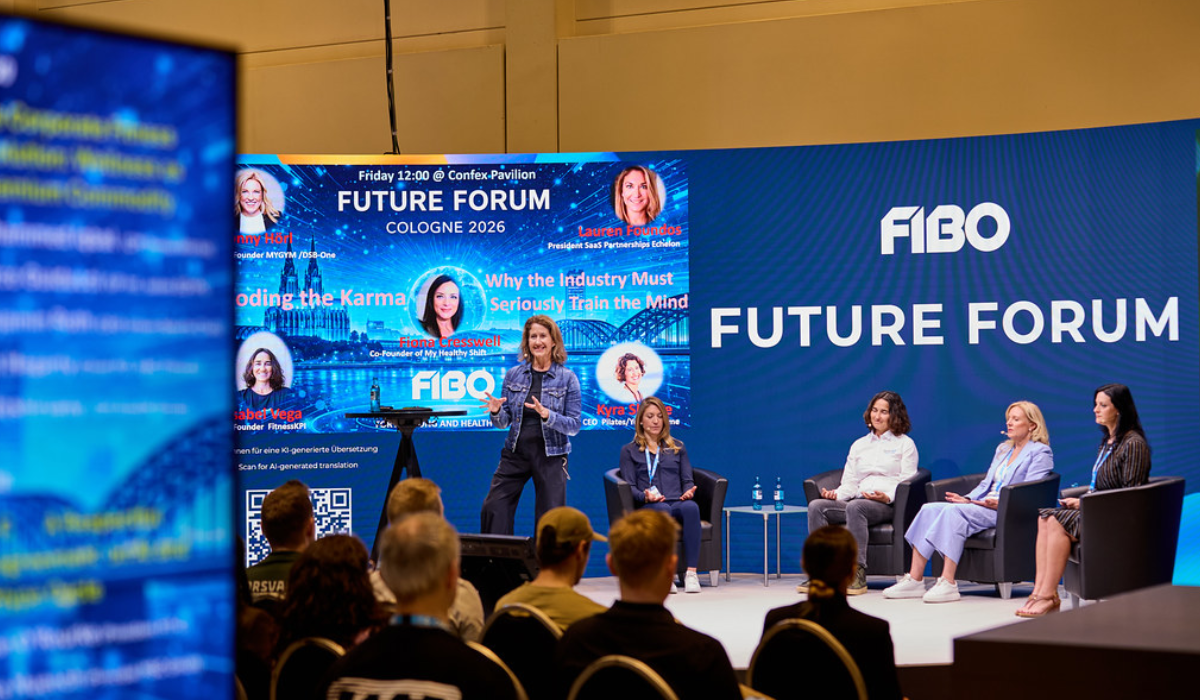
With around 175,000 visitors from 136 nations and more than 1,000 exhibitors and partners from over 50 countries, the event impressively confirmed its global appeal. FIBO has long been more than just a traditional trade fair: It functions as a global marketplace for innovations, trends and strategic partnerships. Fitness studios are increasingly developing into social meeting places and health centers that go far beyond traditional training.
While proven forms of training such as strength training and classic cardio training continue to play a central role, completely new exercise and training concepts are emerging in parallel. These combine physical performance with an experiential character and thus appeal to new target groups that were previously hard to reach. Technologies such as artificial intelligence, wearables and data-based training control are also ensuring ever greater individualization - training is becoming more precise, efficient and personal.
"FIBO 2026 has impressively demonstrated that the fitness industry is developing into a mainstay of the healthcare industry," says Michael Köhler, Managing Director of FIBO organizer RX Deutschland. "The trade fair offers a holistic view - of fitness, health and nutrition, networked through digital innovations and AI. The innovative strength of the companies and the enormous international interest underline the growing social importance of fitness and prevention."
Silke Frank, Event Director of FIBO, adds: "FIBO is not just a meeting place for the industry - it is its compass. Anyone who wants to understand where the global fitness market is heading will find the answers here. The interest of exhibitors and visitors from all over the world shows: What happens here sets standards - far beyond the exhibition halls."
One particularly striking trend is the fusion of competition, community and training. Formats such as Hyrox are exemplary of this development: they combine functional strength exercises with endurance elements and thus create a hybrid competition experience that inspires both ambitious athletes and recreational athletes. The social aspect comes more into focus and training becomes a shared experience.
Fitness as a lifelong companion
Another key focus is on demographic change. Fitness offers for older people are becoming increasingly important, as they make a decisive contribution to maintaining mobility, independence and quality of life. The industry is responding with targeted concepts for healthy ageing that promote strength, coordination and mobility.
Fitness icon and former bodybuilder Ralf Moeller put it in a nutshell: "If a 60, 70 or 80-year-old today decides to start fitness training, it's worth it." This perspective makes it clear that fitness is no longer tied to a specific age, but is seen as a lifelong resource.
The term "longevity" was made tangible at the trade fair: instead of abstract visions of the future, the focus was on concrete, everyday approaches - from sleep optimization and stress management to training methods that promote regeneration. This means that health is increasingly being shaped proactively instead of just reacting to illness.
At the same time, specialization within the industry continues to advance. Tailor-made training programmes, women-specific offers and boutique studios with a clear focus on certain training styles or target groups show that fitness is becoming increasingly individualized. Standard solutions are becoming less important, while personalized concepts are becoming the new norm.
Exchange at decision-maker level
FIBO also played a central role at strategic level. Around 70 leading figures from the industry came together at the exclusive CEO Breakfast to discuss current challenges and future prospects. Topics such as digitalization, skills shortages, new business models and international expansion took center stage.
"If we want to grow together as a fitness industry, we also have to act together - and this event at FIBO offers the perfect platform for this," emphasized Prof. Dr. Thomas Wessinghage, 1st Chairman DSSV e. V. and Vice Rector DHfPG.
Alexander Pfitzenmeier, Managing Director of the IFAA, added: "For years, we have maintained an intensive and valuable exchange among studio operators in the Think Tank - with the CEO Breakfast, we have now taken this dialog to a new level."
Focus on female leadership
With the Women's Leadership Summit, FIBO 2026 sent a strong signal for more diversity and female leadership in the industry. The format offered a platform for exchange, inspiration and concrete recommendations for action. In addition to presentations and workshops, the focus was on networking and mutual support.
"If you look at current events in our world, it is clear that it is so important for women's voices to be heard more and for more women to sit on decision-making bodies, because we need to change the world. We need to change the leadership structures," emphasized Jennifer Halsal, founder and consultant of The Collective Network.
The presentation of the RX Female Award to Sabrina Albert and Amina Kurbanova underlined the importance of female innovation in the fitness industry. Presenter Judith Williams paid tribute to the award winners with the words: "I am delighted with all my heart about this great success. You can only imagine how much discipline and dedication you have both worked towards this moment."
Experience instead of exhibition
FIBO increasingly developed into an interactive experience for visitors. Instead of passive consumption, the focus was on active participation. In various experience areas, training forms could be tried out directly, from calisthenics and functional training to dance and flow formats.
This development shows a fundamental change: the boundaries between spectator and participant are becoming blurred. Fitness is not just presented, it can be experienced. Low-threshold offers in particular also allow easy access for beginners.
The sense of community plays a central role here. Whether in group workouts or spontaneous challenges, many visitors experienced fitness as a unifying element that creates motivation and a sense of belonging.
Social and political relevance
The growing importance of the industry is also reflected in the political attention. Representatives of international institutions and local political players used the trade fair as a platform for exchange and positioning. The presence of high-ranking delegations made it clear that fitness is no longer just a lifestyle topic, but is perceived as a relevant component of modern health policy.
Michael Köhler formulated a clear vision: "Our goal is to bring the dynamism of the fitness industry and the special vibe of FIBO even more strongly to the city of Cologne in the future and thus contribute to further strengthening Cologne's image as an active, exercise-oriented metropolis."
FIBO 2026 is an example of an industry in transition. Fitness is evolving from an isolated leisure activity into an integral part of a healthy, connected and conscious lifestyle. Technology, individualization and community are shaping this change and make it clear: the future of health does not begin with illness, but in everyday life.
Editorial team fitnessmarkt.de
Source and image source: RX Deutschland GmbH
Published on: 24 April 2026