
On October 9, 2026, the program for the Aufstiegskongress in Mannheim will feature a scientific presentation on GLP-1 medications. Markus Wanjek from the German University for Prevention and Health Management will deliver the presentation. His audience consists of gym owners, studio managers, and trainers—not medical professionals.
The announcement states that these medications are creating new target groups for fitness and health studios—people who require professional training guidance and long-term support. This brings a topic into the fitness industry for which the appropriate tools are currently lacking. People who lose a significant amount of weight never lose fat alone. A bathroom scale doesn’t reflect that.
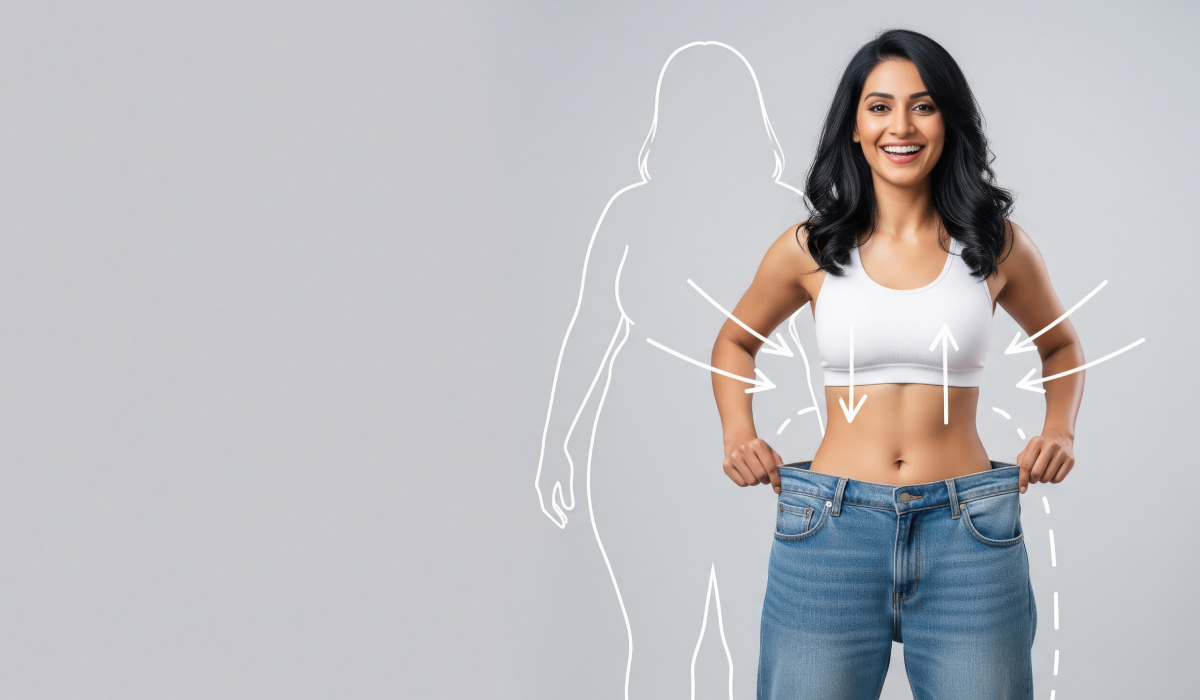
Approved for a BMI of 30 or higher and explicitly to be used in conjunction with exercise
Tirzepatide mimics two intestinal hormones, GLP-1 and GIP. Their receptors are found in the pancreas and brain, among other places; their activation reduces appetite and influences blood sugar regulation. The active ingredient is administered once a week as a subcutaneous injection using a pre-filled pen on the abdomen, thigh, or upper arm. It was first introduced to the market for the treatment of type 2 diabetes; the indication for weight management followed later.
The European Medicines Agency approves it for weight management starting at a body mass index (BMI) of 30, and for weight-related comorbidities such as high blood pressure or sleep apnea starting at a BMI of 27. The most common side effects affect the gastrointestinal tract and, according to the approval documents, are usually mild to moderate. It is available by prescription only.
The agency’s assessment states that weight loss is primarily due to a reduction in fat mass. It does not specify how the remainder is distributed.
The treatment is generally paid for privately. The Saxony Association of Statutory Health Insurance Physicians advises medical practices that a prescription for obesity treatment cannot under any circumstances be billed to statutory health insurance plans. Prescriptions must be issued strictly in accordance with the indication, with documented justification in the patient’s medical record; otherwise, health insurance plans may file claims for reimbursement. For everything that happens afterward in the exercise area, another passage is more important. According to the approval text, the tirzepatide injection for overweight patients is intended to complement—not replace—a calorie-restricted diet and increased physical activity. Whether this recommendation is followed is decided outside the doctor’s office.
One-fifth less weight, one-quarter of that lean body mass
A substudy of the SURMOUNT-1 approval trial investigated the composition of the weight loss. At the start and after 72 weeks, 160 participants were measured using DXA, an X-ray technique that separately measures fat, bone, and lean tissue. Body weight decreased by 21.3 percent. Approximately three-quarters of the loss was fat mass, and one-quarter was lean body mass. The analysis was published in February 2025 in *Diabetes, Obesity and Metabolism* and was funded by the manufacturer, Eli Lilly.
More interesting than the figure itself is the comparison group. In the placebo group, which received identical lifestyle counseling, the ratio of fat to fat-free mass remained the same. The active ingredient, therefore, does not alter the composition of weight loss; it simply increases it.
A Phase 2 study published in June 2026 in *Nature Medicine*, which was also reported by the *Deutsches Ärzteblatt*, found that tirzepatide alone resulted in a significantly higher proportion of lean body mass in the weight loss. The study was commissioned by the biotech company Scholar Rock, which is developing an antibody for muscle preservation and therefore has an interest in a high baseline value. Both values come from randomized studies using X-ray measurements.
Seven studies and two conflicting interpretations
The term “lean body mass” is less precise than it sounds. It encompasses muscle tissue, as well as body water, glycogen, organ tissue, and bone, and during significant weight loss, much of this is lost simultaneously. Current methods cannot clearly distinguish these components.
Just how much this alters the conclusion is shown by a meta-analysis published in the *International Journal of Obesity* in June 2026, which summarizes seven randomized studies involving 821 patients. The proportion of fat-free mass relative to total body weight increased by 1.81 percent. Its absolute amount decreased by 1.74 kilograms.
Both figures come from the same analysis. Depending on which one is cited, the same study results can sound like a all-clear or a warning.
Body composition scales measure water, not muscle
Bioimpedance devices send a weak alternating current through the body and estimate body water percentage based on the resistance. Muscle tissue contains a lot of water, while fat tissue contains very little. Muscle mass itself is not measured but estimated using equations. This works as long as the body’s water balance remains stable. However, it is not reliable in cases of rapid weight loss, changes in fluid intake, or significantly reduced food intake.
A validation study published in *Frontiers in Nutrition* in 2024 compared a widely used multi-frequency device with DXA. The measurements were reproducible and stable from day to day. However, compared to the X-ray method, the device systematically overestimated lean body mass by 2.8 kilograms. The test was conducted on 14 healthy adults under laboratory conditions.
The systematic error is thus of the same order of magnitude as the amount of muscle mass that is at the heart of this entire debate.
The devices remain usable for long-term monitoring, provided the conditions remain constant. The study adhered to guidelines that can be replicated in practice:
- the same time of day; in the study, this was ten hours after the last meal
- no strenuous exercise in the 48 hours prior
- no alcohol the day before
- always the same device, because the manufacturers’ estimation equations differ
Hand strength increased, while lean body mass decreased
A third measurement category is often overlooked, even though it most closely reflects what exercise is intended to achieve. The SEMALEAN study, also published in *Diabetes, Obesity and Metabolism* in 2026, assessed not only body composition but also handgrip strength and resting energy expenditure in patients taking semaglutide. Lean body mass decreased during the first seven months and remained stable thereafter. Handgrip strength increased. The proportion of participants with sarcopenic obesity—that is, obesity accompanied by pathologically reduced muscle function—decreased over the course of the study.
Source: Apo Global Limited
Image source: #1828748939 Shivani / stock.adobe.com
Published on: 21 August 2026