
Intermittent Pneumatic Compression (IPC) boots have become one of the most versatile and effective forms of compression therapy for sports and medical purposes. These boots have been clinically developed for sports therapy, clinical treatment and post-operative care. They can help accelerate wound healing, eliminate congestion and restore the balance of a person's natural drainage systems.
In addition, their ability to combine advanced device design and air pressure control to potentially stimulate circulation, reduce edema or swelling, and aid lymphatic drainage remains a technological marvel.
In this article, we explore the mechanism and functions of compression boots and how they promote recovery and health in athletes.
Intermittent compression boots: mechanism and function
Intermittent pneumatic compression (IPC) boots have been strategically designed to accelerate recovery and health by potentially improving blood flow and reducing muscle fatigue. This is achieved by rhythmically applying and releasing pressure throughout the legs.
The boots contain different air chambers that are inflated and deflated in sequence, gently compressing the leg muscles and blood vessels. The technology used mimics the body's natural muscle pump, improving lymphatic drainage, venous return and the removal of metabolic waste such as lactic acid.
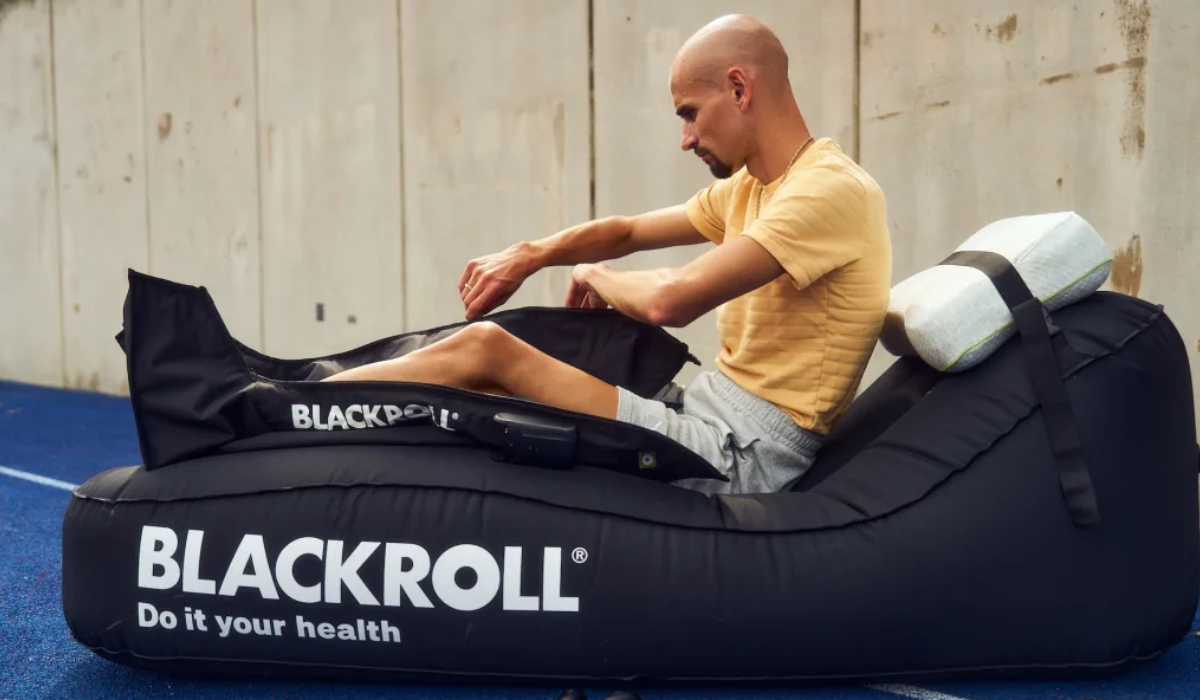
Blackroll, a leading company in the field of regeneration technology, offers ICP boots, for example, which illustrate this mechanism very well. Five air chambers, which overlap 360°, are integrated into these boots. This creates an even, undulating pressure from the lower leg to the thigh, with no gaps or uneven compression. Such an even and continuous flow improves blood circulation to the entire limb.
In addition, the programmed sequence allows the chambers to inflate, which results in the fluids being transported upwards towards the heart. This can help with swelling and the feeling of heavy legs that athletes experience after intensive training sessions.
Functionally, IPC boots serve multiple purposes depending on the specific needs of the user. For example, the Blackroll model can be used in low-pressure pulsation mode to gently warm up muscles and stimulate blood flow for athletes before they begin their workout.
In addition, athletes can use the higher pressure sequence mode after long periods of standing and training. This mode can contribute to a faster recovery by helping to flush out fatigue-inducing waste products.
In addition, Blackroll's model features pressure regulation between 20 and 120 mmHg, allowing users to easily choose between different massage programs, be it pulsating, sequential or a combination of both. This makes these ICP boots versatile for different health and recovery goals.
Scientific and therapeutic benefits of IPC boots
Numerous clinical findings underscore why intermittent compression is often necessary for athletes and patients to improve health and recovery. In addition to the obvious promotion of recovery and circulation, these procedures do much more.
They help your immune system stay efficient, keep your muscles working together as they should, and make you feel more comfortable in your body. And that's not all. People often find that they sleep better, cope with stress more easily and even feel more focused during the day.
Neuromuscular relaxation and stress reduction
IPC boots provide rhythmic, undulating compression that has a calming effect on the user's nervous system. The pressure helps to activate the sensory receptors in the skin and muscles, which in turn activates the parasympathetic nervous system, also known as the "rest and digest" state.
In addition, the activation of the nervous system puts the user in a state of deep relaxation and reduces tension, which can lead to improved sleep quality or relaxation after exercise. This makes IPC therapy an excellent stress regulation tool for people who are concerned about their mental and physical recovery.
Supporting the immune system and lymphatic system
Even though IPC therapy is known for its outstanding effect on blood circulation, it also has a decisive influence on the lymphatic system. The mechanical pressure generated helps to stimulate lymphatic flow. This leads to improved removal of inflammatory mediators and effective transportation of immune cells.
Over time, IPC therapy may be able to improve a person's immune system, prevent the accumulation of toxins in tissues and reduce chronic swelling. This potential benefit is especially important for people who struggle with chronic inflammation or who spend a lot of time sitting down and moving little.
Tissue regeneration and skin vitality
By increasing blood flow in the small veins under the skin, intermittent pneumatic compression (IPC) therapy helps the tissue to absorb more oxygen and nutrients. Improved circulation can promote the formation of healthy collagen, improve skin tone and potentially accelerate healing. Additionally, it promotes lymphatic drainage, which can help reduce varicose veins and soft tissue pain. IPC therapy is therefore beneficial for long-term rehabilitation and healing after surgery.
Improved mobility and joint flexibility
Regular IPC therapy sessions may be able to reduce muscle stiffness and maintain joint flexibility, particularly for athletes who have overused their muscles and joints, as well as people living a sedentary lifestyle or recovering from injury. By ensuring constant fluid exchange in fascia and muscles, this therapy can reduce tension, relieve stiffness and maintain range of motion around the hips, knees and ankles in some circumstances.
Ideal for office workers
IPC boots are not only suitable for athletes or people in rehabilitation, but also for anyone who sits at a desk all day. When you sit for hours on end, your legs feel heavy, may be a little swollen and your circulation suffers. IPC boots often relieve that tired, aching feeling and usually help to keep your circulation going. Over time, they not only make your legs feel better, but also support your overall vascular health.
How IPC boots are integrated into recovery and healthcare
Intermittent pneumatic compression (IPC) therapy can be integrated into any type of daily routine, no matter who you are or what you need. Consider athletes, for example. After an intense workout or a crucial game, they slip into IPC boots.
The boots support blood flow to the heart and help remove waste products from the muscles, speeding recovery and minimizing muscle discomfort. Athletes usually combine this with stretching exercises, ice baths and plenty of water to really recover after training.
In clinics or hospitals, IPC boots help people who suffer from poor circulation, restricted movement or lymphoedema. In the physical rehabilitation of their patients, therapists often add them to optimize lymphatic drainage and prevent deep vein thrombosis. They are also used in hospitals after operations to potentially reduce the risk of blood clots by improving circulation.
Conclusion
Intermittent pneumatic compression is a bridge between medical application and active recovery and is therefore more than just a therapy. It creates rhythmic pressure and enables its users to improve the lymphatic and circulatory systems, which supports resilience and healing.
Furthermore, with continued innovation from trusted manufacturers like Blackroll, IPC technology is becoming more effective and accessible, leading to better health and recovery for its users.
Source and image source: BLACKROLL AG
Published on: 13 March 2026