
If you’re specifically looking to build a stronger, more muscular butt, there’s one question you can’t really avoid: Are specialized glute machines more effective, or do classic free weights like barbells and dumbbells deliver better long-term results?
This debate is nothing new. On one side are squats, Romanian deadlifts, lunges, and hip thrusts with the barbell. On the other side, entire gyms are now dedicated to glute workouts: hip thrust machines, glute drive machines, abduction machines, kickback machines, and various presses.
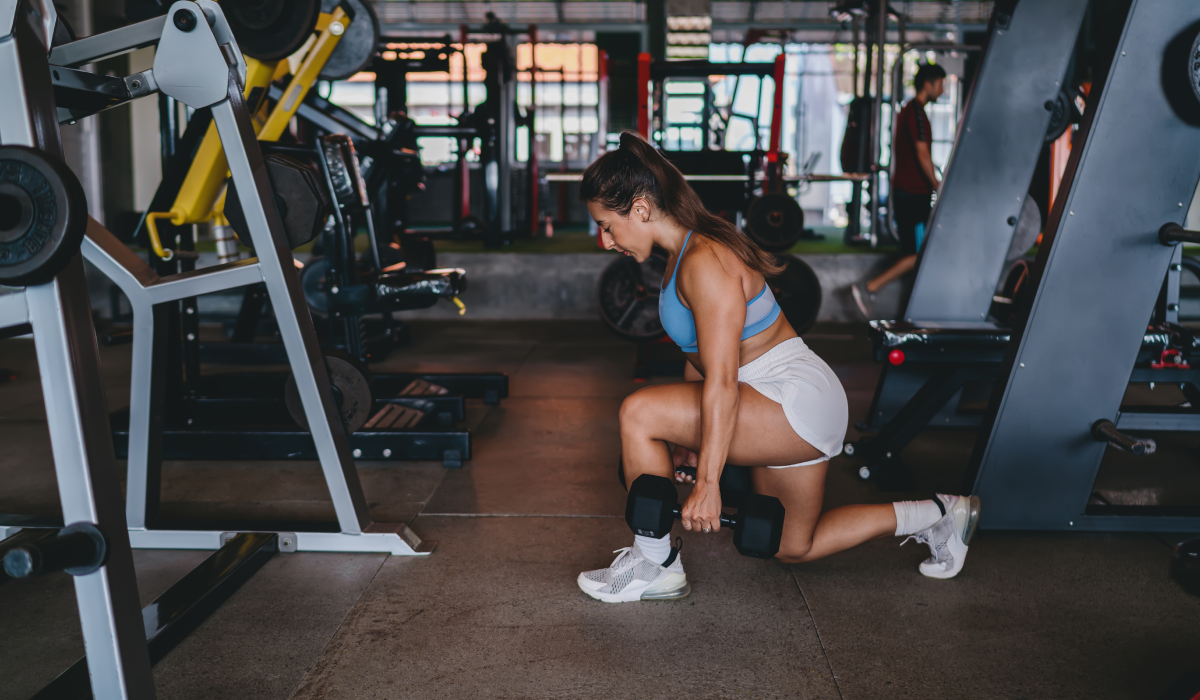
Yet the question “machine or free weights?” is often framed too simplistically. After all, for the muscle itself, it doesn’t initially matter whether the resistance comes from a barbell, a weight stack, or a machine. What matters is the actual training stimulus the muscles receive—and whether that stimulus can be increased over the long term.
The short answer, therefore, is: Both glute machines and free weights can work exceptionally well for building muscle. In the long run, a combination of the two is likely to be particularly practical for most exercisers because their respective strengths complement each other.
Glute Machines vs. Free Weights—What Does the Science Say?
A systematic review with a meta-analysis that directly compared machine and free-weight training found no significant difference in muscle growth between the two training methods. Strength gains, however, were an interesting finding: Trainers improved particularly in the type of movement they were actually training. So, those who train with free weights get stronger especially at free-weight exercises, and the same applies to machines.
This is an important point for practical application. Those who ask only whether a machine or a barbell is “better” overlook the factors that may be far more relevant for long-term muscle growth: sufficient training intensity, progressive overload, adequate training volume, appropriate exercise selection, proper form, and consistent training over months and years.
Even specifically for the gluteus maximus, research does not suggest that only one particular type of exercise works. A systematic review and meta-analysis published last year concluded that various hip-extension exercises can promote the growth of the gluteus maximus. These include, among others, squats and hip thrusts, as well as certain machine exercises. Combinations of different hip extension exercises were also effective.
The more interesting question, therefore, is not: machine or free weights? But rather: Which exercises allow you to effectively, progressively, and sustainably challenge your glutes?
Why Free Weights Are So Effective for Glute Training
Free-weight exercises have a decisive advantage: they usually demand more from the body than just the movement of a single joint. For example, during a barbell squat, the hips and knees must move, while the core and other muscle groups stabilize the body. Bulgarian split squats place additional demands on balance and coordination. Romanian deadlifts combine a high load on the hip extensors with a pronounced stretch of the muscles involved. This makes free-weight exercises extremely efficient. With just a few movements, you can simultaneously train your glutes, legs, and parts of your core.
Squats: A Classic with Real Glute Potential
Squats are often viewed primarily as a quadriceps exercise. When performed correctly, however, they can also provide a strong stimulus for growth of the gluteus maximus. Current research on gluteus muscle growth shows that squats can promote the growth of the gluteus maximus. The range of motion appears to play a role here as well. However, this does not mean that everyone has to squat as low as possible. Anatomy, flexibility, mobility, technique, and training goals all help determine which squat variation makes sense for each individual.
Barbell Hip Thrust: Targeted Hip Extension
Hardly any exercise is as strongly associated with modern glute training as the barbell hip thrust. And not without good reason. Studies show that hip thrusts can produce a high level of activation in the gluteus maximus. At the same time, there is now also direct data on muscle growth. Research suggests that both hip thrusts and squats can contribute to building the gluteus maximus.
An important note: High muscle activation on the EMG does not automatically equate to greater long-term muscle growth. EMG studies can provide interesting insights but should not be the sole factor in determining which exercise is included in a training plan.
Romanian Deadlifts and Split Squats Complement the Workout
Ultimately, the great advantage of free weights lies in their versatility. In addition to hip thrusts and squats, you can use a barbell or dumbbells to perform exercises such as Romanian deadlifts, reverse lunges, walking lunges, step-ups, and Bulgarian split squats. Many of these exercises not only target the gluteus maximus but also the hamstrings, quadriceps, and stabilizing muscles.
Where glute machines shine
Imagine two sets. During the first set of Bulgarian split squats, you’re battling for balance, grip strength, proper breathing, and the burning sensation throughout your entire leg. During the second set, you’re sitting or lying securely in a machine and can focus almost exclusively on maximizing the load on the target muscles. Which set is better? There’s no one-size-fits-all answer. But the second set can have a decisive advantage: the limiting factor may be closer to the muscles you actually want to train. This is exactly where machines come into play.
Greater stability can allow for more targeted stimulation
With many glute machines, the range of motion is more strictly defined and the body is stabilized. This often reduces the demands on balance and coordination. That doesn’t automatically mean that machines build muscle better. Rather, it means they can make it easier to focus on engaging the target muscles.
This is particularly useful after you’ve already completed heavy compound exercises. After squats and Romanian deadlifts, the next exercise doesn’t necessarily have to be another complex full-body movement. A glute machine can then allow for additional effective sets without requiring the same level of coordination.
Hip Thrust Machine vs. Barbell
A good example is the hip thrust. For the classic barbell hip thrust, you need to set up a bench, a barbell, and weights. The barbell must be positioned and often padded. As the workout weights increase, even the setup can become cumbersome.
A good hip thrust or glute drive machine significantly reduces this effort. Just sit down, set the weight, find your position, and start training. When it comes to building muscle, this convenience is by no means insignificant. After all, even the most theoretically perfect workout program is of little use if its exercises are so cumbersome that they’re regularly skipped. A machine that enables quick and consistent workouts can therefore offer a real advantage in the long run.
Are glute machines better for isolation?
To some extent—but “isolation” shouldn’t be confused with “better.” Kickback and abduction machines allow you to specifically target certain functions of the gluteal muscles. This can be an excellent complement to heavy hip extension movements. An abduction machine, for example, serves a different purpose than a Romanian deadlift. That’s why it makes little sense to pit the two against each other.
A complete glute workout doesn’t have to consist of ten different exercises. However, varying movement patterns can be beneficial if they cover different functions and load profiles.
Muscle Building: Machines and Free Weights Are Closer in Effectiveness Than Many Realize
If your main goal is to build bigger glutes, you don’t have to ideologically choose one side over the other. Studies comparing machines and free weights found no significant difference in muscle growth. This aligns with a fundamental principle of hypertrophy training: muscles respond to the load, not to the prestige of an exercise.
A barbell doesn’t come with a built-in muscle-building bonus. And a machine doesn’t automatically make an exercise any less “functional.” What matters most is whether an exercise suits the person doing it and can be progressively increased in a meaningful way.
When it comes to strength, it depends on what you want to get stronger at
When it comes to strength, the answer is a bit more nuanced. Research shows a clear specificity effect: Those who train with free weights improve their performance particularly in free-weight exercises. Those who train on machines develop specific strength for those movements.
If your goal is to lift as much weight as possible in a barbell squat, you should train by doing squats. A leg press can complement your training, but it doesn’t replace the specific ability to perform a heavy barbell squat. If your main goal, on the other hand, is glute hypertrophy, you don’t need to stick to a specific type of exercise nearly as much.
The Underestimated Factor: How Easily Can You Progress in an Exercise?
Long-term muscle growth requires progression. That doesn’t mean you have to add more weight to the bar at every workout. Progression can also mean performing more repetitions with the same weight, controlling the movement better, or sensibly increasing your training volume over the long term.
Machines have a practical advantage here: the conditions are very consistent. Adjust your seat, select the weight, and perform the movement. During your next workout, you can reproduce the same conditions relatively easily.
Free-weight exercises are more complex. Your daily form, stability, and technique can have a greater impact on your performance. In return, they develop skills that machines don’t challenge as much—especially coordination and stabilization under free weight.
What’s better for your glutes in the long run?
For maximum glute development, there’s a strong case for not having to choose between machines and free weights. A well-structured workout can combine free multi-joint exercises with more stable machine exercises. This allows you to combine high mechanical loads, different movement patterns, and additional targeted training sets.
This could mean, for example, starting a session with a heavy squat or split squat variation. This is followed by a hip extension movement such as a Romanian deadlift or hip thrust. Machines can then be used for additional glute work.
Who can particularly benefit from glute machines?
Machines can be helpful for beginners because the prescribed movement often requires less coordination. Advanced bodybuilding-oriented trainees also benefit from them if they want to add more training volume after performing heavy free-weight exercises.
At the same time, machines can be an interesting alternative if certain free-weight exercises are uncomfortable for an individual or simply don’t suit a person’s anatomy and training style.
However, this does not mean that machines are automatically “safer.” Even a machine can be set up incorrectly, loaded too heavily, or used in a technically improper manner. Conversely, free-weight exercises performed correctly are not inherently dangerous.
When Free Weights May Be the Better Choice
For those who want to develop not only muscle mass but also free-weight strength, coordination, and movement proficiency under load, free weights are an incredibly versatile tool.
There’s also a practical consideration: a barbell and a few weight plates allow for numerous exercises. Specialized glute machines, on the other hand, often cover only a small range of possible movements. Free weights are therefore particularly efficient for home gyms or studios with limited space.
And finally, there are exercisers who simply enjoy free-weight exercises more. This factor should not be underestimated. A training program that is consistently followed over the years almost always outperforms a supposedly “optimal” program that is abandoned after just a few weeks.
Glute Machines or Free Weights: The Result
The question “Glute machines or free weights?” has no clear winner. For pure muscle building, direct scientific comparisons have so far shown no clear general advantage of machines over free weights. Specifically for the gluteus maximus, studies also show that different exercises—from squats and hip thrusts to machine movements—can trigger muscle growth.
Free weights score points for their versatility, the coordination they require, and high training efficiency. Machines offer stability, a highly reproducible movement, and the ability to incorporate additional targeted resistance.
For long-term glute development, therefore, it matters less whether the resistance comes from a machine or a barbell. What matters is that the chosen exercises suit your anatomy and training goals, are performed with sufficient intensity, and can be progressively adapted over months and years.
The most practical solution, therefore, is not “machines versus free weights,” but rather “machines plus free weights.”
FAQ: Common Questions About Glute Machines and Free Weights
Which is better for the glutes: machines or free weights?
Based on current research, there is no fundamental advantage of machines or free weights when it comes to building muscle. Both can be effective if you train with sufficient intensity and progression. Combining both forms of training is a practical way to take advantage of their respective benefits.
Can you build a good butt using only glute machines?
In general, machines can provide a strong stimulus for muscle growth. Key factors include load, training volume, and long-term progression. However, a varied workout incorporating different movement patterns can be beneficial.
Can you effectively train your glutes using only free weights?
Yes. Exercises such as hip thrusts, squats, lunges, step-ups, and other free-weight hip extension movements can strongly engage the gluteus maximus. Studies have shown that several of these exercises result in high glute activation and have positive effects on muscle growth.
Is the hip thrust machine better than hip thrusts with a barbell?
Not necessarily. Both variations can place a heavy load on the hip extensors. However, a machine may be more convenient and quicker to set up and provides a more stable environment for movement. The barbell variation is more flexible and can be performed practically anywhere where a barbell, weights, and a suitable support surface are available.
Which exercises are particularly good for the gluteus maximus?
Research supports squats and hip thrusts, among others, as effective exercises for growing the gluteus maximus. Other hip extension exercises and combinations of different movements can also be effective.
Which builds muscle faster: heavy weights or high reps?
When it comes to building muscle, it’s not just the number on the weight stack or the dumbbell that matters. What’s crucial is providing a sufficient training stimulus with appropriately chosen resistance and long-term progression. That’s why different rep ranges can be used in hypertrophy training.
Do you need an abduction machine for big glutes?
No. An abduction machine isn’t a must for successfully building glutes. However, it can be a useful addition for specifically targeting hip abduction. The foundation of a training program can still consist of larger hip and leg movements.
Editorial team at fitnessmarkt.com
Image source: #2190819567 BullRun / stock.adobe.com
Published on: 25 September 2026