
It often starts out seemingly harmless. A dull ache in the lower back after a long day at work. Tense shoulders after hours in front of a screen. A sharp pain when getting up in the morning. What seems harmless at first develops into a constant companion for many people. Back pain has long been one of the most common health issues, causing millions of lost workdays each year, yet many treatments still focus exclusively on the symptoms. It has long been known, however, that a sore back is rarely the actual problem. Far more often, it is the result of a complex interplay of lack of exercise, muscular imbalances, stress, poor posture, and a decline in core muscle stability over the years.
Modern back therapy therefore takes a different approach. Instead of treating individual symptoms in isolation, it relies on a holistic concept that activates the muscles, reduces pain, and simultaneously supports the body’s natural regenerative processes.
Why Our Backs Are Under More Strain Today Than Ever Before
The human back was designed for movement—not for sitting at a desk for eight hours, constantly using a smartphone, or taking long car rides. Yet it is precisely this lifestyle that defines the daily lives of many people. The result: the stabilizing deep muscles lose their effectiveness, while individual muscle groups become permanently overloaded.
Added to this is another factor that is often underestimated: stress. Under psychological strain, muscle tension automatically increases. The neck, shoulders, and lower back are particularly sensitive to this constant state of alert. If this cycle isn’t broken, occasional tension can develop into chronic discomfort.
This is precisely why a short-term heat treatment or a single massage is often insufficient. It is crucial to actively address the root causes and restore balance to the body’s natural functions.
The future of back therapy lies in combining proven methods
In modern physical therapy, there is a growing recognition that various forms of therapy are most effective when they are meaningfully combined. Muscle activation, pain reduction, relaxation, and regeneration do not compete with one another but share a common goal: to make the back more resilient again.
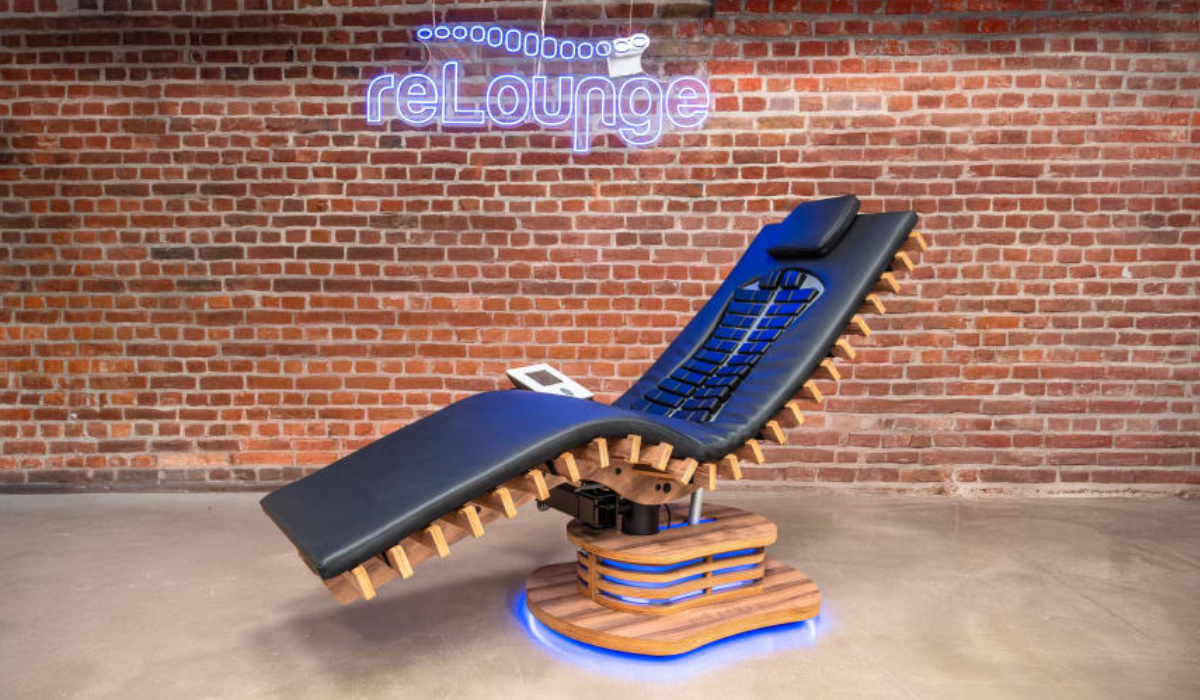
The reLounge from ATHLETIQO embodies precisely this principle. Instead of offering just a single therapy, the system combines several medically established methods into a single treatment.
Four therapeutic approaches—intelligently combined
Activation Instead of Avoiding Movement
People with back pain often move less. While this may seem logical at first, in the long run it often exacerbates the symptoms. This is because untrained muscles continue to lose stability and become increasingly unable to support the spine.
This is where the integrated EMS technology (Electrical Muscle Stimulation) comes into play. Targeted electrical impulses activate even deeper muscle groups that are often difficult to reach in everyday life or even during traditional strength training. The goal is not to build muscle in the athletic sense, but to reactivate the muscles that are crucial for posture and stability.
Relieve pain, enable movement
Also integrated is TENS therapy (Transcutaneous Electrical Nerve Stimulation), which has been a staple of physical pain therapy for many years.
The gentle electrical impulses can influence pain perception and help patients regain greater freedom of movement. After all, movement remains one of the most important building blocks of long-term back health.
Heat as a Regeneration Booster
For decades, heat has been one of the most popular treatments for muscle tension—and for good reason. It improves local blood circulation, supports oxygen supply to the tissues, and helps relax tense muscles.
In the reLounge, however, heat does not act in isolation; rather, it complements the electrical therapy modalities and creates optimal conditions for relaxation and recovery.
Relief in the ZeroG Position
A special feature of the reLounge is the so-called ZeroG position. In this position, the legs and upper body are positioned in a way that can reduce strain on the intervertebral discs and spine. Many users find this position exceptionally comfortable, as it relieves pressure on the lumbar spine and noticeably reduces strain on the entire musculoskeletal system.
More Than Just Wellness: A Medical Device for Professional Use
At first glance, the reLounge resembles a comfortable relaxation lounger. In fact, however, it is a therapy system certified as a Class IIa medical device under the MDR, specifically developed for professional use in physical therapy practices, health centers, and fitness facilities.
The combination of EMS, TENS, heat, and ergonomic positioning makes its use significantly more complex than that of traditional massage or relaxation chairs. The goal is not merely well-being, but rather to support therapeutic processes—always within the framework of an individualized treatment plan.
Why this topic is becoming increasingly relevant for gyms as well
Training and therapy have been increasingly converging for years. More and more people are working out not just to improve their performance or achieve an athletic physique, but to stay healthy, flexible, and pain-free in the long term. A strong back isn’t built solely through heavy strength training. Rather, the key lies in the interplay of mobility, stability, recovery, and intelligently controlled exertion.
The reLounge fits perfectly into this modern understanding of health. It replaces neither training nor physical therapy, but can meaningfully complement both areas and thus support a holistic approach to back health.
Back therapy today requires a holistic perspective
Back pain can rarely be attributed to a single cause. Nor is there a single measure that serves as the solution for everyone alike. This is precisely why therapeutic concepts that combine various scientifically established methods are gaining importance. The reLounge from ATHLETIQO follows precisely this approach: muscle activation, pain modulation, heat, and a posture that relieves pressure on the back work together to create the foundation for a modern form of back therapy.
Anyone who takes a holistic view of back health today quickly realizes that it is not individual treatments that determine long-term success, but rather the intelligent interplay of movement, therapy, recovery, and an active lifestyle. Innovative systems like the reLounge can be a valuable component in this process—especially where prevention, therapy, and fitness are increasingly converging.
FAQ
What is the reLounge from ATHLETIQO?
The reLounge is a medically certified back therapy table that combines EMS, TENS, heat therapy, and a weight-relieving ZeroG position. It was developed for professional use in the therapy, healthcare, and fitness sectors.
How does the reLounge work?
During a session lasting about 20 minutes, electrical impulses for muscle activation (EMS) and pain modulation (TENS) are combined with heat and ergonomic positioning. The goal is to provide holistic support for back therapy.
Is the reLounge a medical device?
Yes. According to the manufacturer, the reLounge is a Class IIa medical device under the MDR, CE-certified, and registered with the FDA.
Who is this treatment suitable for?
The reLounge is used, among other things, for chronic back pain, muscular imbalances, disc problems, muscle tension, and stress-related symptoms. An individual assessment of possible contraindications is conducted before use.
Does the reLounge replace strength training or physical therapy?
No. The reLounge is intended as a supplement. Regular exercise, targeted strength training, and—if necessary—physical therapy remain important components of long-term back health.
Editorial team at fitnessmarkt.de
Source and image source: ATHLETIQO GmbH
Published on: 17 August 2026