
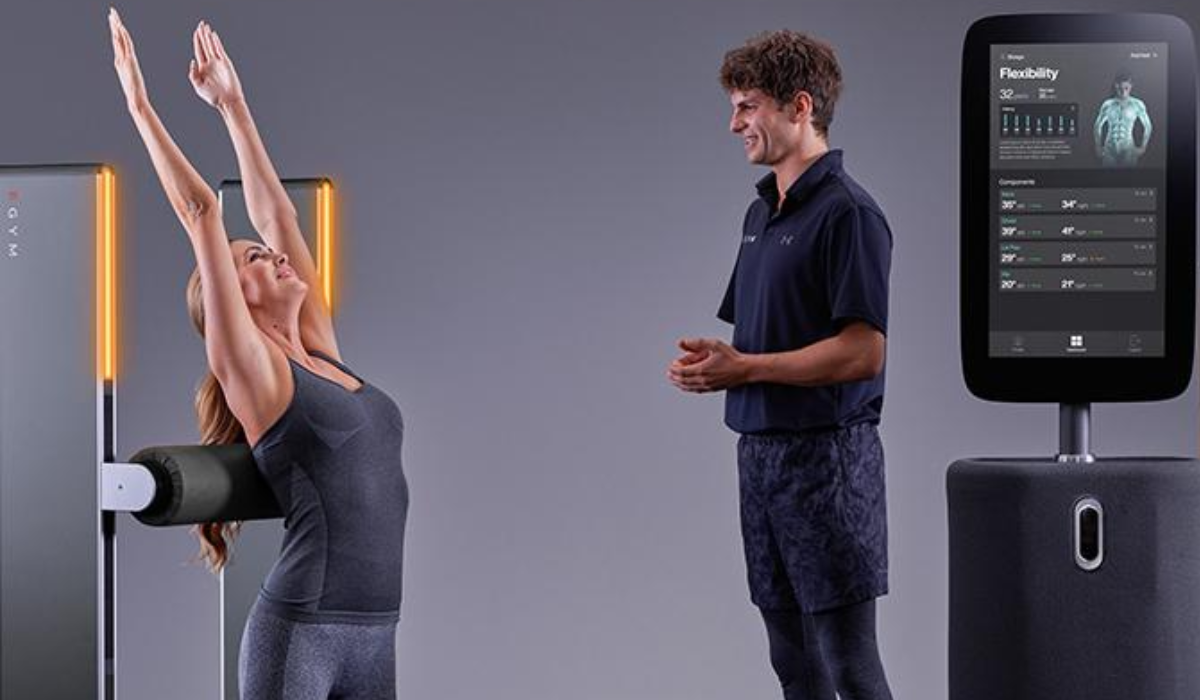
People are getting older and the demands of daily life are more diverse than ever, which is why two factors are becoming increasingly important: Flexibility and mobility. These play a key role in determining how agile, efficient and resilient the body and mind remain into old age. However, although they undoubtedly form the foundation for our range of motion, they are a niche part of many people's everyday training routine. EGYM 's Fitness Hub provides a remedy: it measures, analyzes and integrates flexibility and mobility into fitness and health management at an unprecedented level.
Why flexibility and mobility are the foundation of training
Many people think of fitness primarily as the sum of strength, endurance and muscle building. For a holistic picture, there is more to it, because a muscular but immobile system is neither functional nor healthy. Even simple everyday movements such as lifting a child, climbing stairs or turning the body on a chair show how much the range of movement determines well-being and independence. Mobility and flexibility often decline dramatically, especially in old age, with massive consequences for health, quality of life and independence. Prevention is therefore key: those who train their mobility early on not only remain more efficient, but also delay age-related restrictions. Regular mobility and flexibility exercises not only improve athletic performance. They increase the range of movement, prevent injuries and promote positive body awareness. Studies show that more flexible people stay fit, independent and healthier for longer.
Flexibility and mobility - definition and differences
The terms are often confused, but refer to different physical characteristics:
Flexibility refers to the passive stretchability of muscles and connective tissue. It allows parts of the body to be pulled apart over a certain length - for example during a static stretch. Without good muscle and fascia flexibility, many movements cannot be carried out to their full extent.
Mobility describes the active range of motion of one or more joints, i.e. the ability to perform movements in a controlled and powerful manner. It is often a combination of flexibility, strength and coordination. For example, anyone who can perform a deep squat without compensation or pain has good mobility.
Both components are mutually dependent: without flexibility, there is no mobility - and conversely, too much flexibility without active stabilization can also increase the risk of injury.
Why mobility and flexibility determine quality of life
The fact that flexibility and mobility are important far beyond training is demonstrated by the everyday lives of both older and younger people: Those who can move their joints freely and without restrictions remain independent for longer, fulfill their wishes in their job, everyday life and hobbies and maintain a high quality of life.
A restricted range of movement - for example due to shortened muscles, stiff joints or injuries - is often the start of a negative health cycle:
1. susceptibility to falls and injuries increases.
2. painful evasive movements and compensations creep in.
3. activity decreases, which in turn further reduces mobility ("vicious circle of immobility").
4) In addition to physical complaints, the consequences often include psychological problems such as insecurity or fear of activity.
Targeted mobility and flexibility training can break this cycle. New scientific studies confirm this: Mobility and flexibility correlate with a longer life expectancy, reduced risk of falling, better balance and increased independence into old age.
Flexibility and mobility as performance boosters
Many people underestimate the influence that mobility has on performance. Yet numerous studies have shown that regular stretching and mobilization can increase strength levels by up to 18%. The reason for this is that muscles and joints can only really make the most of their maximum strength when they have an optimal range of motion - technique becomes cleaner, power transmission is better and the risk of injury is reduced.
Mobility is just as essential in competitive sport: it improves the transfer of energy between the body segments, increases acceleration and ensures better execution of movements. Strength is only functional if it is available throughout the entire range of motion. Mobility training also improves coordination and supports regeneration after intensive exertion.
Injury prevention through targeted mobility training
Injuries are one of the most common reasons for training and everyday absences. Static and dynamic stretching has been proven to reduce the risk of injury, especially in the case of muscle strains, fiber tears and overuse injuries. People who train their mobility strengthen their muscles and connective tissue in equal measure, improve joint stability and protect themselves against pain and restricted movement in the long term. Flexibility and mobility also minimize the risk of risky evasive movements; instead, movements are carried out efficiently and safely. Professional and recreational athletes, as well as senior citizens and patients in rehabilitation, therefore benefit enormously from accompanying mobility training.
The EGYM Fitness Hub: digitalization meets mobility analysis
Digital tools have revolutionized training behaviour in recent years. EGYM 's Fitness Hub plays a pioneering role in this: As the central measuring and control instance of modern fitness areas, it combines high-precision movement analysis, objectivity in training control and ease of use - for beginners and professionals alike.
The EGYM Fitness Hub combines state-of-the-art 3D camera technology with an intuitive software interface. It enables contactless, fast and accurate recording of body status: mobility tests, strength analyses, body composition and more are evaluated in just a few minutes. Trainers and therapists receive objective data, members and patients understandable results and targeted advice.
The Fitness Hub integrates seamlessly into the EGYM ecosystem, automatically adjusts all machines and visualizes progress and deficits in an easy-to-understand way with the so-called BioAge. This motivates continuous improvement and enables extremely personalized fitness support.
The Squat Flexibility Test: benchmark for modern mobility measurement
The new Squat Flexibility Test from the EGYM Fitness Hub is particularly innovative. The squat is considered the "supreme exercise" and immediately shows where mobility, flexibility or technique are problematic. Especially in everyday life and sport, the ability to perform a clean squat is an extremely valid indicator of a healthy movement pattern.
How does the test work?
The user stands in front of the 3D camera and performs a single squat. In less than 20 seconds, the software automatically analyzes several joint points, detects asymmetries, movement restrictions and abnormalities in the movement pattern. The analysis is presented in a clear and understandable way. Members receive concrete tips for improvement straight away and are motivated to implement them.
The advantage: the test can be carried out both with and without a trainer; onboarding is faster and more precise, and training planning is more targeted. Progress is recognizable, deficits are addressed promptly and, in the best case scenario, injuries are prevented.
Who is the EGYM Fitness Hub suitable for?
For studio operators and practices
The Fitness Hub enables fast, contactless mobility analyses and body data recording. Onboarding new members becomes more efficient and the training area is used more intelligently. Studios position themselves as modern service providers for holistic health and retain customers in the long term.
For trainers and therapists
Access to real-time data facilitates individual support and promotes a partnership-based approach with members. Training plans are personalized to movement profiles and progress is measured objectively.
For members and patients
Regardless of fitness level, everyone benefits from clear, objective results and personalized training recommendations. Visible progress increases motivation and reduces the risk of injury.
Progress through data: Motivation, visualization and training success
People who know how their mobility is developing remain more motivated. The Fitness Hub makes progress visible, for example through BioAge, and provides data for re-checks and progress checks. This boosts confidence in your own body and training methodology.
Everyday training becomes more efficient: Incorrect movements are identified and can be corrected through specific exercises before they have a negative impact on performance or health. This makes fitness not only measurable, but also controllable and sustainable.
Modern training and diagnostic methods: Best practice and smart innovations
Digital mobility analyses and smart diagnostic tools - for example with sensors, cameras or wearables - are becoming increasingly important in modern fitness studios and practices. They enable precision, time savings and personalized training based on specific movement and load profiles. Individual training specifications lead to measurable success and greater customer satisfaction.
Digital platforms and AI-supported apps now offer personalized training plans and analyses as well as real-time feedback. Personalization through AI and motivating elements such as gamification increase customer loyalty. Wearables and mobile solutions enable continuous exercise tracking - at home, on the move or in the gym.
The most important benefits at a glance
Fast and contactless analysis: onboarding takes just a few minutes, all machines are set up automatically.
Objective mobility measurement: Symmetry, restrictions, range of motion and technique are analyzed with high precision.
Motivation and transparency: All progress is visualized directly, which makes it easier to implement training plans and increases self-motivation.
Personalized training recommendations: All analyses flow directly into training planning, which increases the quality of support.
Efficiency for staff: Trainers and therapists receive objective data and recommendations for action and can concentrate more on individual support.
Final thought: Why it pays to focus on flexibility, mobility and the EGYM Fitness Hub
Flexibility and mobility are the foundation for quality of life, performance and health into old age. The optimal mobility of each individual is individual and depends on everyday life, professional life, genetic factors and training history. Smart training relies on objective, smart diagnostics and individual, data-based coaching.
The EGYM Fitness Hub offers a holistic and highly precise solution to make mobility and strength measurable, motivating and suitable for everyday use for everyone - for more enjoyment of life, independence and success in training.
Want to find out more? Get the current prices for EGYM fitness equipment!
Editorial team fitnessmarkt.de
Source and image source: EGYM GmbH
Published on: 9 September 2025