
Who is stronger: the 57-kilogram athlete with a total of 330 kilograms, or the 120-kilogram athlete with a total of 800? Measured in kilograms, the question is easily answered, but from a sporting perspective, it’s the wrong question to ask. That’s exactly why there are comparison formulas that factor out body weight. For decades, that was the Wilks formula; since 2020, the International Powerlifting Federation (IPF) has been using GL points for scoring. The calculator provides both values based on a competition result—and shows just how different they can be.
Why a Formula Is Needed at All
Strength does not increase proportionally to body weight. A person who weighs twice as much is not twice as strong, because muscle cross-sectional area increases with the square of body height, while muscle volume increases with the cube. Lightweight athletes therefore lift relatively more, while heavyweight athletes lift more in absolute terms. Without a correction, the heaviest weight class always wins in a direct comparison.
That’s why all comparison formulas work the same way: they multiply the total by a factor that depends on body weight and is calibrated so that, across all weight classes, roughly the same number of top performances rank at the top. Lighter athletes receive a higher factor; heavier athletes, a lower one.
This is used wherever rankings are not determined within a single weight class: for the “Best Lifter” title in a competition, for team standings, in open leagues, and in any gym ranking where members weighing 60 and 100 kilograms compete in the same field.
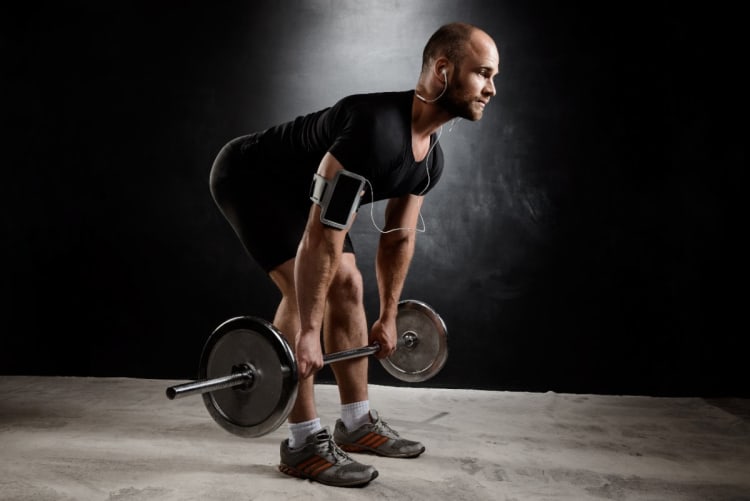
Wilks, Wilks 2, and IPF GL—the three values in the calculator
The Wilks formula was developed by Robert Wilks, the former president of the Australian federation, and was published in 1994. It relates the total to a fifth-degree polynomial derived from competition data from the early 1990s. It was the standard for over two decades, and to this day, many gyms and open competitions still use it.
Wilks 2 is the revised version published in 2020, featuring new coefficients and a different scaling factor. The values are significantly higher than in the original—a Wilks 2 value of 500 corresponds roughly to an old Wilks value of 420. The two numbers cannot therefore be directly compared, which regularly causes confusion in practice.
The IPF-GL points (“Goodlift”) have been the world federation’s official scoring system since May 2020. Instead of a polynomial, an exponential function is used here, and there are four separate sets of coefficients: Triathlon and bench press, each in classic and equipped styles. The scale is set so that a world record corresponds to approximately 120 points. This makes the value easier to interpret than the Wilks numbers.
Which score matters to you depends on where you compete. The IPF and its member federations—in Germany, the BVDK—use only GL points for scoring. Outside these structures, you’ll mostly still encounter Wilks.
What Constitutes a Good Score
As a rough guide for the classic triathlon: Below 50 GL points, you’re in the beginner range; 50 to 65 represents a solid training foundation after one to two years; 65 to 80 corresponds to ambitious competitive sport at the state level, 80 to 95 puts you among the national elite, and starting at around 95 points, you’re competing internationally.
These figures are based on experience from results lists; they are not qualification standards. If you want to gauge where you stand, it’s best to check the rankings of your own association directly—that’s where you’ll find the scores you’d actually be competing against.
Here, too, comparing yourself to yourself is more important than comparing yourself to others. If your GL score increases over the course of a season, you’ve gotten stronger, regardless of whether your body weight has changed. That is precisely the purpose of the formula.
The Limitations of the Formulas
All comparison formulas are statistical averages, not physical laws. There are three limitations you should be aware of.
First, they are unreliable at the extremes. For very light and very heavy athletes, there is less underlying data, so the calibration is correspondingly less accurate. The old Wilks formula, in particular, was considered disadvantageous in the heaviest weight classes.
Second, they do not distinguish by age. For youth and masters categories, there are separate age factors that are added on top—the calculator does not account for them.
Third, the point value says nothing about the distribution. Two athletes with identical GL scores can have completely different profiles: one may be strong in the deadlift, the other in the bench press. For training planning, therefore, looking at the individual disciplines is more meaningful than the total point score. The 1-RM calculator shows you how to estimate your maximum in a single exercise based on a working set.
Weight Class and Point Value
Since the factor decreases as body weight increases, it’s worth asking whether moving down a weight class will earn you more points. The answer depends on how much effort it takes to lose weight. Losing two to three kilograms over several weeks—usually without losing strength—generally results in a better point score. Rapid weight loss in the week before a competition, on the other hand, almost always costs more kilograms on the barbell than the factor is worth.
If you want to plan this transition properly, you first need to know your actual energy requirements—which the TDEE calculator provides. As a rule of thumb, aim for a deficit of no more than 10 percent and at least 1.8 grams of protein per kilogram of body weight to maintain maximum strength.
For Gyms: Setting Up a Fair Ranking System
In-gym strength competitions often fail because the same heavy lifters always win. Ranking by GL points instead of kilograms solves this in one step and makes the women’s and men’s rankings directly comparable, since the coefficients are calibrated separately.
In practice, a simple format suffices: three exercises, the best clean attempt for each, using body weight on the day of the competition. Anyone who does this twice a year also gains a database for training guidance. We’ve written about how there are still many reservations, especially when it comes to women starting heavy strength training, in our article on strength training for women.
Frequently Asked Questions / FAQ
Wilks or IPF GL—which should I report?
If you’re competing in an IPF federation, only GL points count. For everything else, Wilks is still the metric most people understand. It’s best to list both and specify which is which.
Why is my Wilks-2 score so much higher than my old Wilks score?
Because the revised formula uses a different scaling factor. This barely changes the order of the athletes, but the absolute numbers change significantly. Comparing old and new values is pointless.
Do the formulas also apply to the bench press alone?
For GL points, yes—there are specific coefficients for that. The calculator uses them as soon as you select a bench press category. The Wilks formula, on the other hand, is calibrated only for the triathlon and does not yield a meaningful number for individual disciplines.
Does the weight before or after the weigh-in count?
The official weigh-in weight on the day of the competition is always used for scoring, not the weight at the time of the lift. Depending on the federation, there are two hours between the weigh-in and the first attempt, during which many athletes regain several kilograms.
Is there a formula for powerlifting in the gym outside of competition as well?
The formulas work with any set of three numbers, but they require comparable conditions. If the depth of the squat or the point at which the bar is set down during the bench press varies from person to person, you’re ultimately comparing form rather than strength.
Editorial team at fitnessmarkt.de
Image source: #29175063 cookie_studio / freepik.com
Published on: 9 March 2026