
Table tennis is often underestimated. At first glance, the sport seems smaller and less physical than tennis, badminton or squash. The table is small, the racket light and the distances are short. However, this is precisely where a large part of the training effect lies. Playing regularly requires reaction, coordination, body tension, footwork and concentration at the same time. The classic recreational game has long since become a versatile form of training that has found its place in leisure activities, club sports and increasingly also in functional fitness training.
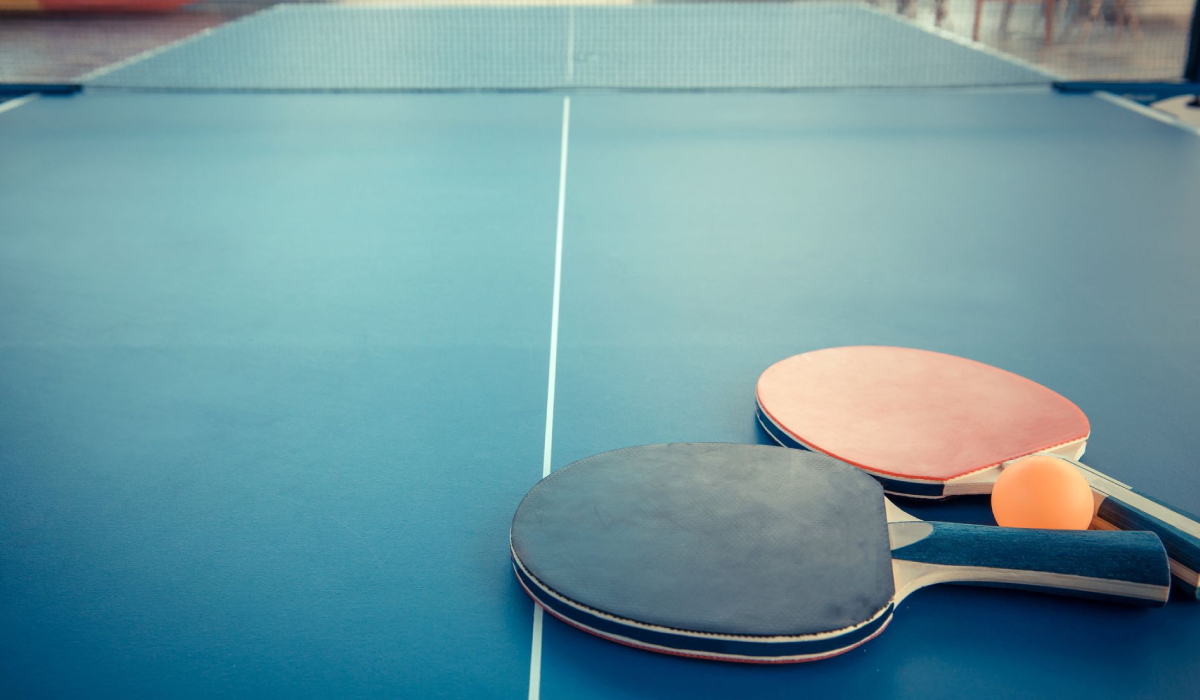
Why table tennis is more than just a reaction game
In table tennis, it is rarely just the striking arm that makes the difference. Every rally starts with a stable basic position. The knees are slightly bent, the weight is on the front feet and the upper body remains active. When the ball arrives, short explosive steps, quick changes of direction and rotations from the center of the body follow.
The result is a workout that focuses on teamwork rather than isolated muscle strength. This is exactly what makes table tennis interesting for functional training. The body has to react, stabilize, turn, slow down and immediately realign itself. These movements are more similar to many sporting and everyday requirements than rigid exercises on equipment.
Which muscle groups work during the game
The legs do much more than is visible from the outside. Small sidesteps, lunges and weight shifts train the thighs, calves and glutes. The importance of active footwork is particularly noticeable during longer rallies. If you only hit with your arm, you quickly lose control and speed.
The torso also plays a central role. Many strokes result from a slight rotation. The abdominal and back muscles stabilize the body, transfer power and help to return to the starting position after each stroke. Shoulders, arms and forearms take over the fine control. Wrist and grip strength are particularly important for spin, placement and changes of pace.
How table tennis promotes endurance and speed
Table tennis consists of short bursts of exertion. A rally often only lasts a few seconds, but requires maximum attention and fast movements during this time. This is followed by a short break before the next rally begins. This pattern is reminiscent of interval training with varying intensity.
In relaxed recreational play, the load remains moderate. However, it can increase significantly at higher speeds. Pulse, breathing and reaction times are more demanding. This is precisely why table tennis is a good way to train endurance not only through long, uniform units, but also through short, playful exertion.
There is also the mental component. The mind constantly has to make decisions: short or long, left or right, attack or safety, spin or block. This combination of physical and cognitive activity sets table tennis apart from many classic forms of cardio.
Why coordination is crucial in racket sports
Many requirements come together in racket sports. Eye-hand coordination, timing, balance, rhythm and spatial judgment must function simultaneously. Table tennis intensifies these requirements because the ball and distance are very small. The ball comes back quickly, changes of direction happen abruptly and mistakes are immediately visible.
This is exactly what is valuable for training. Those who play regularly not only improve their stroke technique, but also their body awareness. The body learns to organize itself more quickly. This can also help in other sports, such as tennis, badminton, squash or ball sports with fast reaction situations.
How table tennis can be integrated into fitness training
Table tennis can work as its own training or as a supplementary component. Mobility exercises for the shoulders, hips and ankles are suitable before the game. This can be followed by short reaction exercises, side steps or light jumping forms. This prepares the body for quick changes of direction.
Different goals can be set in the main part. For more stamina, longer rallies can be played at a controlled pace. Short, intensive series with fixed positions are suitable for speed. For coordination, exercises in which spin, direction of the shot or speed are deliberately varied help.
A suitable environment is also important. Stable table tennis tables, sufficient space around the table and a safe floor make a big difference, because fast movements can only be executed cleanly if the stance and distance are right. Particularly in clubs, schools or fitness centers, the equipment is a decisive factor in whether table tennis can really be used regularly and effectively.
Who table tennis is suitable for
The advantage of table tennis is that the intensity can be easily controlled. A relaxed game can be low-threshold, an ambitious match very challenging. This makes the sport suitable for different age groups and training levels. Beginners can slowly build up their technique, coordination and movement. Advanced players can increase their speed, tactics and athleticism.
Table tennis is also interesting for groups. The sport requires little explanation, quickly generates motivation and allows for short active sessions. In fitness studios, companies, clubs or schools, it can bring movement into situations where traditional training is often more difficult to access.
Source: Kübler Sport GmbH
Image source: #141446767 CasanoWa Stutio / stock.adobe.com
Published on: 6 May 2026